
March Vlog 2026
Navigating Grief and Household Organization
Practical tips for widows
By Mary Beth Woll, Linda Smith, and Elisa Hawkinson, author of “Calming Your Chaos”
After the loss of a husband, many widows discover that grief is only part of the journey. Suddenly, they must manage an entire household alone — including years (sometimes decades) of belongings filled with memories.
Sorting through possessions can feel overwhelming emotionally, spiritually, and practically. Yet with patience, support, and a few simple principles, this difficult task can become a gentle step toward healing.
Below are practical, compassionate tips gathered from conversations within The Widows Project community.
Start With Permission to Go Slowly
One of the greatest mistakes widows make is believing they must handle everything quickly.
You don’t.
Grief affects decision-making, emotional stamina, and mental clarity. Rushing the process can deepen exhaustion and sorrow.
“Take your time. You don’t have to rush it. It’s very challenging emotionally, so be patient with yourself.”
Some widows take months. Others take years. Both are perfectly valid.
Use Two Simple Questions to Guide Decisions
When facing closets, storage rooms, garages, or offices filled with belongings, complexity can paralyze you. A simple decision filter helps:
Do I need it?
Do I use it?
If the answer to both is no, it may be time to release it.
“How much stuff do you have… and how much space do you really need?”
This approach removes guilt and replaces it with clarity.
When Children Don’t Keep the Items
Many widows save belongings hoping their children will treasure them.
Sometimes they do.
Sometimes they don’t.
And that’s okay.
Your children are building their own lives, homes, and memories.
Offer items freely — but release expectations lovingly.
“Offer it with love… and let it go with peace.”
Honor Sentimental Items Without Filling Your House
Not every meaningful item needs to stay physically in your home.
There are gentle alternatives.
Display What Truly Matters
Choose a few meaningful objects and display them intentionally — perhaps in a shadow box or memory shelf.
Create a Memory Box
Store special sentimental items in one designated container. Visit it when you want to remember.
“You’re holding the memories — not the clutter.”
This keeps the emotional value while protecting your living space.
Photograph Before Letting Go
This single tip can free many widows emotionally.
Before discarding sentimental objects:
Take a photograph.
A photo preserves the story without requiring physical storage.
Examples include:
Wedding gowns
Childhood clothing
Old keepsakes
Objects deteriorating with age
“Sometimes what we really want is the memory, not the item.”
Create Sorting Categories First
Instead of making decisions item-by-item with no structure, create labeled areas:
Keep
Children
Sell
Donate
Discard
This turns one overwhelming project into manageable steps.
“Big emotional jobs become smaller practical decisions.”
Let Generosity Become Part of Healing
Giving belongings away can transform loss into blessing.
When you donate items to:
thrift stores
ministries
shelters
outreach programs
…those possessions become tools to help someone else start over.
“When your things bless someone else, letting go becomes easier.”
Some widows find it helpful to schedule regular donation trips — weekly or monthly — so the process continues gently over time.
Break Down Large Paper Collections
If your husband left behind journals, sermons, music, writings, or research, the volume alone can feel overwhelming.
Instead of sorting every page immediately:
Group items into labeled containers such as:
Poetry
Music
Sermon notes
Personal writings
You can organize first and decide later.
“Organization first. Emotional decisions later.”
Accept Help — You Were Never Meant To Do This Alone
Sorting a lifetime of belongings is physically demanding and emotionally draining.
Sometimes the most important step is simply asking someone to sit with you.
Support may come from:
Friends
Church members
Adult children
Community youth helpers
Moving assistance programs
“Sometimes what helps most isn’t the work — it’s the companionship.”
A Gentle Test for Simplicity
Here’s one creative mindset shift:
Imagine walking into your home as if it were a peaceful guest retreat.
Would it feel calm? Open? Welcoming?
If not, gently ask:
“What could I release to create that peace?”
“Simplifying your home can help quiet your heart.”
Moving Forward With Grace
Letting go of belongings does not mean letting go of your husband.
It means making room for the life God is still guiding you to live.
Some widows sort quickly. Others slowly. Some revisit decisions many times.
There is no timeline for healing.
“Healing isn’t measured by how fast you empty a closet — but by how gently you care for your heart.”
If this article encouraged you, The Widows Project offers community, support groups, and practical resources to help widows walk forward with faith, strength, and hope.
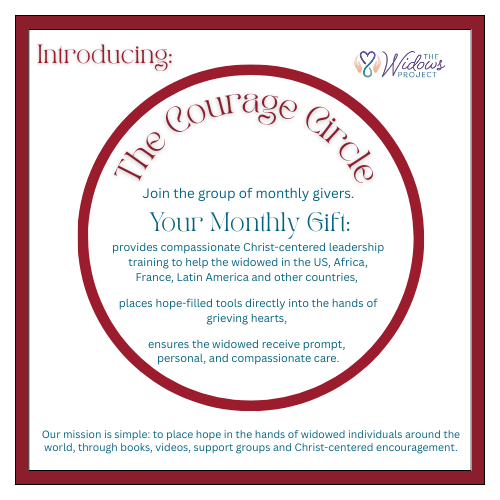
Click here to join the Courage Circle.

Click the image above to make a donation today!

